How to create an AI advertising campaign quickly and in your brand's style
An AI advertising campaign comes together quickly when you set a goal, approve a master visual, and only then produce variants in a consistent brand style with quality control.
Krystian Wydro - AI Creative Director, OtterMind
◆◆ 6 min read
01 - The need
Why does a brand need an AI advertising campaign?
Every campaign starts at the same point: you have a product, a brief, and a deadline. You face the question of how many creatives to make to have enough material for testing. One is usually too few, and ten made manually take too much time.
Instead of creating a single asset and hoping it lands, you build an entire matrix of variants: different slogans and different visuals. You test what stops the scroll and what converts, and then you scale what works. It is a shift in thinking about a campaign: from a single shot to a conscious test.
You go in with one product photo, a background, a brand logo, and a brief, and you come out with a ready set of creatives, for example, tailored to Meta or Google Ads formats.
How to do it right
Start with a short brief that defines the audience, the promise of the ad, and the expected action.
Before the first generation, answer these questions:
What are you promoting, and what audience problem does the product solve?
What should a person do after seeing the ad?
What specific argument is meant to convince them?
Where will they see the ad, and what materials need to be prepared?
Who approves the direction, and who receives the final files?
Include product photos, the logo, and brand identity guidelines. Previous creatives with a commentary on what fits the brand will also be useful. An inspiration folder alone leaves too much room for guesswork.
At the beginning, narrow the scope to the main message and the most necessary formats. If each asset talks about a different advantage of the product, it is harder to judge whether the campaign sticks to the chosen idea.
02 - Quality control
How to prevent AI slop in advertising?
Give the campaign a recognisable direction and evaluate every creative against the brand, the message, and the quality of execution.
'AI slop' is a colloquial term for derivative, unrefined content generated on a mass scale. In advertising, the problem is often plastic-looking skin, accidental set design, or a product changing shape between shots. A correct image that says nothing specific about the brand does just as much damage.
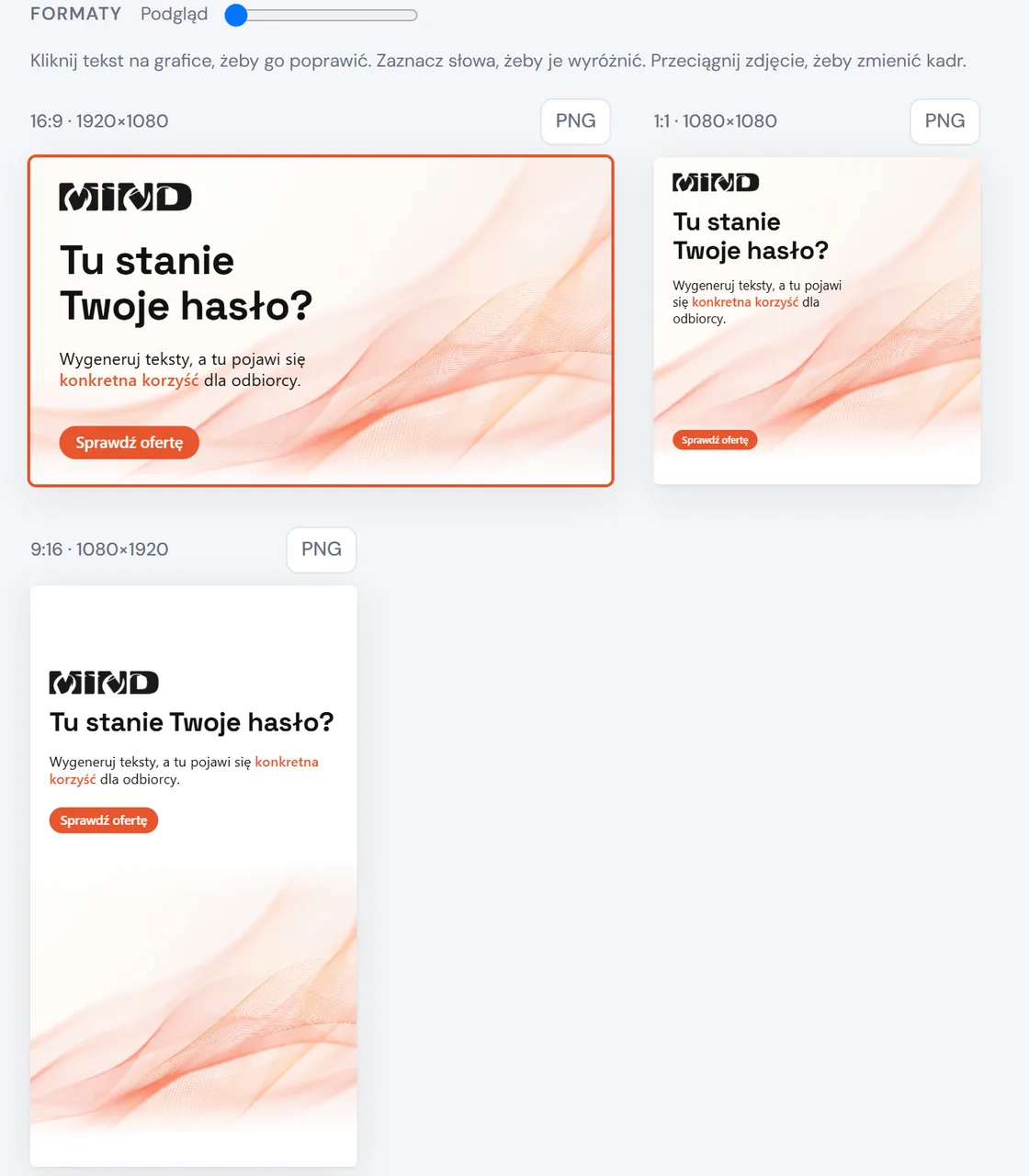
Often, the whole thing is generated and slips out of control, and elements are arranged haphazardly. That is why a tool that allows you to use brand fonts and logos comes in handy, as this is what AI struggles with the most. The tool is supposed to prepare reformatting and further variants in a few minutes.
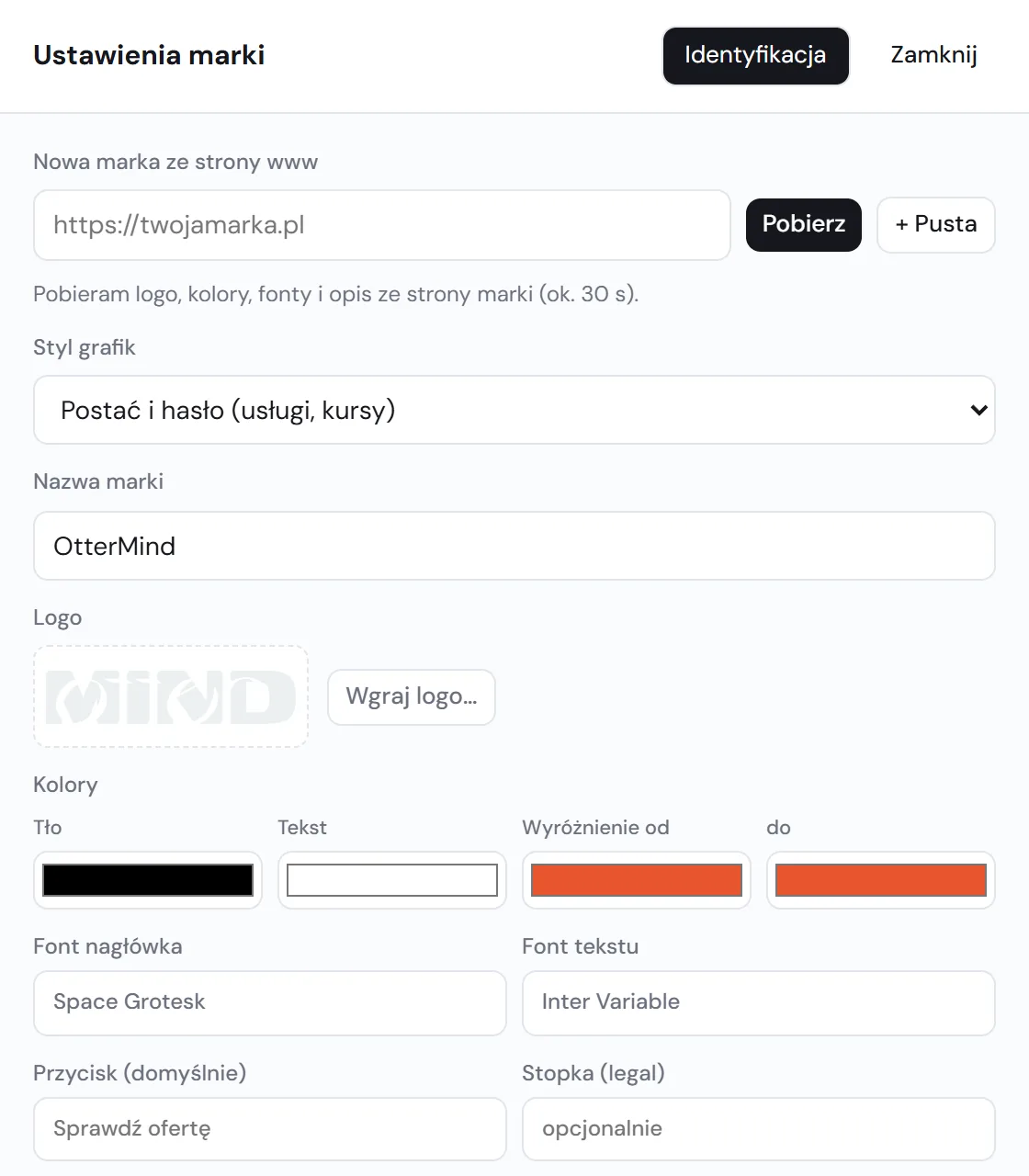
OtterMind Campaign Creator: brand logo and fonts in 16:9, 1:1, and 9:16 formatsBrand settings: logo, colours, and fonts fetched from the website
Cover the logo for a moment. Check if the image still fits the brand's character and shows the product in a convincing way. Then, view the creative in its final size on a phone, because a detail that impresses on a large screen might disappear in an ad.
When working with AI, film language in prompts is helpful. A description of soft light coming from a window and a calm camera push-in conveys a specific visual decision. The command 'make a premium ad' alone leaves the interpretation to the model.
03 - From brief to files
How to move from a brief to a creative?
Work in stages and approve a master visual before you start multiplying materials.
Reference images have practical applications in tools. Adobe Firefly allows you to use an image as a composition reference, and Runway describes the use of references to guide characters, objects, and scenes. These features support image control, but the result still requires evaluation.
Before launching, determine the media budget, landing page, and measurement method. The person running the campaign should know which version they are testing and how they will evaluate the result. Include the production of materials and ad management separately in the scope of cooperation.
What to implement to make future campaigns come together faster?
Save repeatable decisions in templates and tools, and then practice the entire process with the team on a real task.
A good starting point is a brand library: approved product photos, master frames, fonts, colours, and text examples. Add instructions that explain what can be changed and what requires approval.
If the team regularly returns to the same settings, move them to a simple interface. The person preparing the creative then chooses a product, shot, or layout from a set collection. Brand knowledge is available during the workflow.
This is what it looks like in the tools I build:
Tool
Task in the process
What a human evaluates
OtterMind Studio
Guiding work on framing and video through the selection of shot, location, lighting, and camera movement
Composition, atmosphere, and the usefulness of the shot
OtterMind Kampanie
Working from brief and strategy through layout, products, and slogans to a creative board and export
Brand consistency, variant selection, and format correctness
Czystopis
Organising text for a CMS and suggestions regarding language, AI patterns, and SEO
Implementation covers the method of transferring files, approvals, and handling corrections. Start with the area where the team repeats work most often: manually changing formats, recreating settings, or looking for the right materials.
05 - Schedule
How long does it take to prepare an AI advertising campaign?
The deadline depends on the scope of materials, the brand's level of preparation, and the time needed for approvals.
Adapting an approved creative to further formats is a different task than developing a concept and a film with a recurring character. In your schedule, account for the preparation of input materials, selection, corrections, and editing.
For an urgent commission, determine what must be ready for the start, and appoint a decision-maker. Plan the remaining variants in the next round. Also, define the point after which a change in concept means a change in the schedule.
Measure the time until the accepted material. Include the work of the person reviewing and correcting the results. Such a measurement will show whether AI has actually shortened production in your team.
06 - Common mistakes
What mistakes slow down an AI campaign?
The most extra work appears when the team produces variants before approving the direction, or when they only check their quality at the very end.
Especially avoid:
generating more images without a selection criterion,
changing the style between materials of the same campaign,
accepting inaccuracies in the product's appearance,
leaving the logo and slogan solely within the generated image,
automating a stage that the team does not yet execute correctly,
releasing variants without establishing what each of them is meant to test.
Before exporting, compare all creatives side by side. This makes it easier to spot differences that escaped notice during the evaluation of individual files.
Can an entire advertising campaign be made automatically?
You can automate selected stages, such as preparing variants and exporting. A campaign still requires setting a goal, approving the message, controlling materials, and making decisions about distribution and measurement.
How much does an AI advertising campaign cost?
The pricing must be based on the scope: the concept, the number of creatives, formats, video, and corrections. Separately, include the media budget and any potential implementation of tools within the team. The price of access to a generator covers only a part of the process.
Does a team with its own graphic designer need support with AI?
Support can help a graphic designer organise work with references, variants, and consistency control. It is worth testing this on a specific task and comparing the time and quality of the finished materials.
What should you prepare before discussing an AI campaign?
Prepare the goal, audience description, brand materials, product photos, required formats, and deadline. Include previous ads and indicate the person responsible for approval.
How can you check if a creative is AI slop?
Cover the logo and assess whether the image still fits the brand and convincingly shows the product. Then view the creative in its final size on a phone, as small details might disappear.
Where should you start an AI advertising campaign?
Start with a short brief that defines the audience, the promise of the ad, and the expected action. Include product photos, the logo, brand identity guidelines, and previous creatives with a commentary on what fits the brand.
Do you want to prepare future campaigns with the help of AI in your own team? Discover AI implementations led by OtterMind. The starting point is the way materials are created for you today, and the tasks you want to streamline. If you prefer to commission a finished spot or film, see what AI video production looks like.
I use essential cookies. With your consent I'll also enable analytics and marketing cookies. Privacy policy